Deck maintenance is not complicated. It is mostly washing, recoating on a sensible cycle, and looking at the parts nobody looks at.
A realistic schedule
| Frequency | Task |
|---|---|
| Monthly through autumn and winter | Sweep leaves and debris, clear board gaps, move mats and pots |
| Every six months | Wash the surface, check for mould in shaded areas, clear under deck drainage |
| Annually | Inspect fixings, balustrade, stairs and the wall junction, check for movement |
| As required by exposure | Clean and recoat timber, typically more often on sun exposed decks |
| Every few years | Inspect the substructure properly, including posts at ground level |
Sun exposed and coastal decks need attention at the shorter end of every range. Shaded decks need less coating and more attention to mould and drainage.
Cleaning
Sweep first, then wash. Use a deck cleaner suited to your surface and follow the product directions. Be careful with high pressure washers on timber, since they can raise the grain and damage the surface. Let the deck dry properly before any coating goes on.
Pay attention to the gaps between boards. Blocked gaps hold water against the boards and the joists below, which is where rot starts.
Recoating timber
- Choose one system and stay with it. Mixing incompatible products causes problems.
- Prepare properly. Coating over dirt, mould or a failing coat wastes the effort.
- Coat on a dry, mild day and avoid direct hot sun.
- Do the board ends and any cut edges.
- Watch the high traffic areas, doorways and stairs. They will need attention sooner than the rest.
If the coating is patchy in the sunny half and fine in the shade, that is normal. Treat by area rather than waiting for the whole deck to fail.
Composite decks
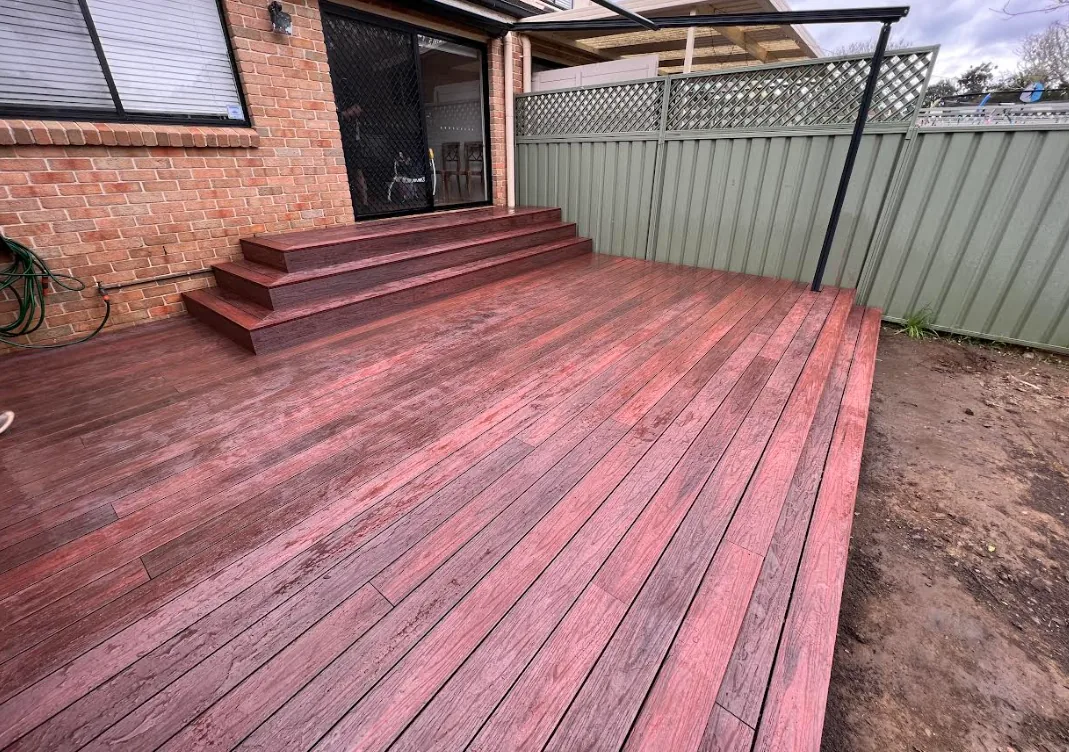
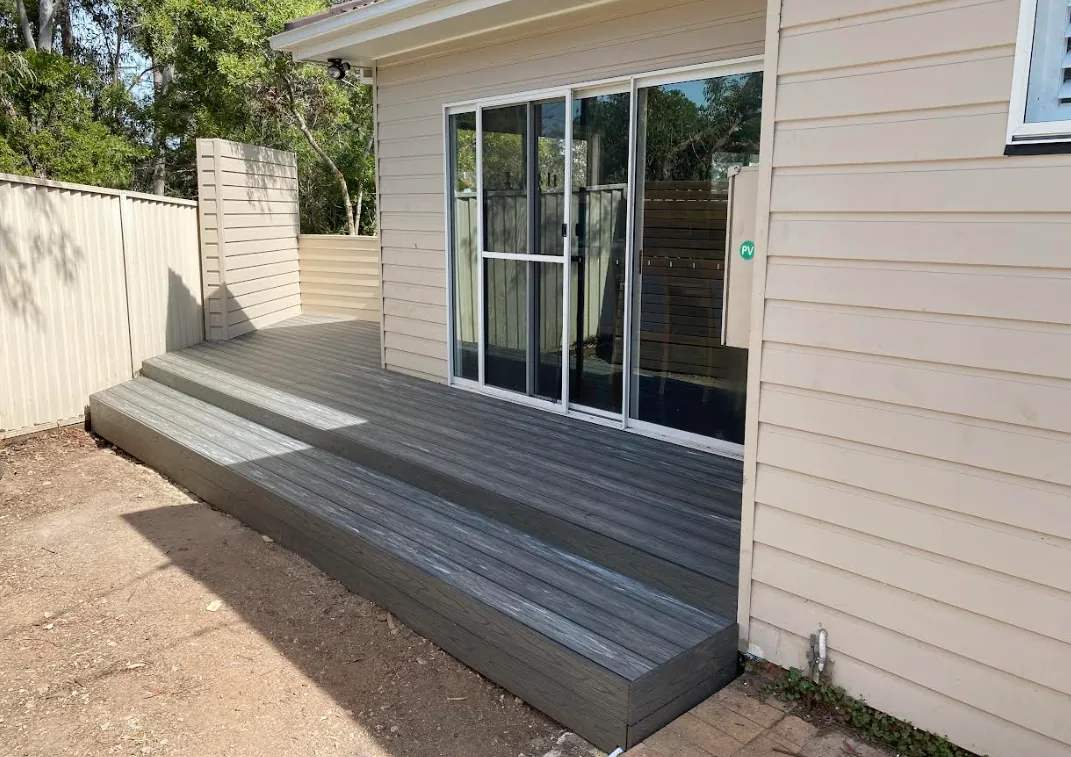
Composite needs washing rather than coating. Clean up spills, keep gaps clear, and treat mould in shaded areas rather than assuming it cannot happen. Follow the manufacturer cleaning instructions, since some products specify what not to use.
The annual inspection
Take fifteen minutes once a year and check:
- Balustrade. Push firmly. Any movement needs attention immediately, since this is a safety item.
- Stairs. Treads, stringers and the connection at both top and bottom.
- Fixings. Rust staining, lifted screws, corroded brackets.
- Boards. Soft spots, cupping, splitting at ends.
- Substructure. Probe posts near the ground and bearers in shaded areas with a screwdriver.
- Wall junction. Any staining on internal walls or cladding near the deck.
- Drainage. Water should leave the area under the deck, not sit there.
Signs of trouble are covered in more detail in how long does a timber deck last.
Small jobs worth doing straight away
- Replace corroded fixings before they stain the timber further
- Reseal any cut ends exposed by board replacement
- Lift planters onto stands so air moves underneath
- Trim vegetation back so the deck gets sun and airflow
- Refix any loose board before the fixing point damages the joist
When to call a builder
- Any movement in balustrade or stairs
- Soft timber in posts, bearers or joists
- Water appearing inside the house near the deck
- Boards repeatedly failing in the same area
- A deck you are considering reboarding, which is a good time to have the frame assessed
Seasonal notes for Sydney conditions
- Summer. Heat and UV are hardest on coatings, particularly on north and west facing decks. Check the sunniest section first when deciding whether to recoat.
- Autumn. Leaf fall blocks board gaps and traps moisture. This is the season where a few minutes with a broom prevents most problems.
- Winter. Shaded areas stay damp for longer, so mould and slippery surfaces show up here. Improve airflow rather than only treating the surface.
- Spring. The best window for cleaning and recoating in most cases: mild temperatures, lower humidity than midsummer and reliable drying.
Coastal decks need more frequent attention to fixings and hardware regardless of season, since salt air accelerates corrosion.
Safety items that are not optional
- Balustrade with any movement in it
- Loose or missing stair treads
- Handrails that are no longer securely fixed
- Rotten timber at a post base
- Nails or screws that have worked their way proud of the surface
These are not maintenance in the cosmetic sense. They are the items that cause injuries, and they should be dealt with as soon as they are noticed rather than added to a list for later.
A simple record to keep
Note the date each time you clean or recoat, what product you used and which areas needed extra work. Two or three entries in and you will know your deck's real cycle rather than guessing at it, and you will have a useful history if you sell.
ORT Constructions repairs, reboards and rebuilds decks across Sydney as part of our decks and pergolas service. If you want shade added while the deck is being refreshed, see how much a pergola costs in Sydney.
Frequently asked questions
- How often should a timber deck be recoated in Sydney?
- It depends on exposure. Decks in full sun need recoating noticeably more often than shaded decks. Judge it by the condition of the coating rather than a fixed interval, and check the sunniest area first.
- Can I pressure wash a timber deck?
- Carefully and at low pressure. High pressure can raise the grain and damage the surface, which then needs sanding before coating.
- Why is my deck growing mould in one corner?
- That corner stays damp. It is usually shade, poor airflow or drainage under the deck. Treat the mould, then fix the cause by improving ventilation or drainage.