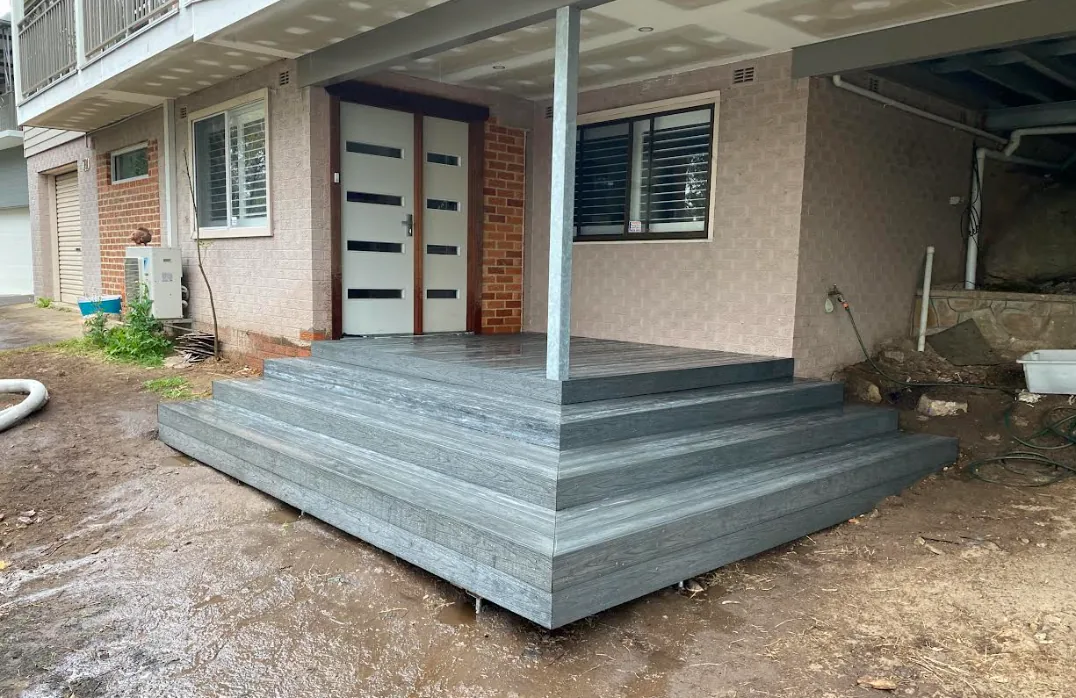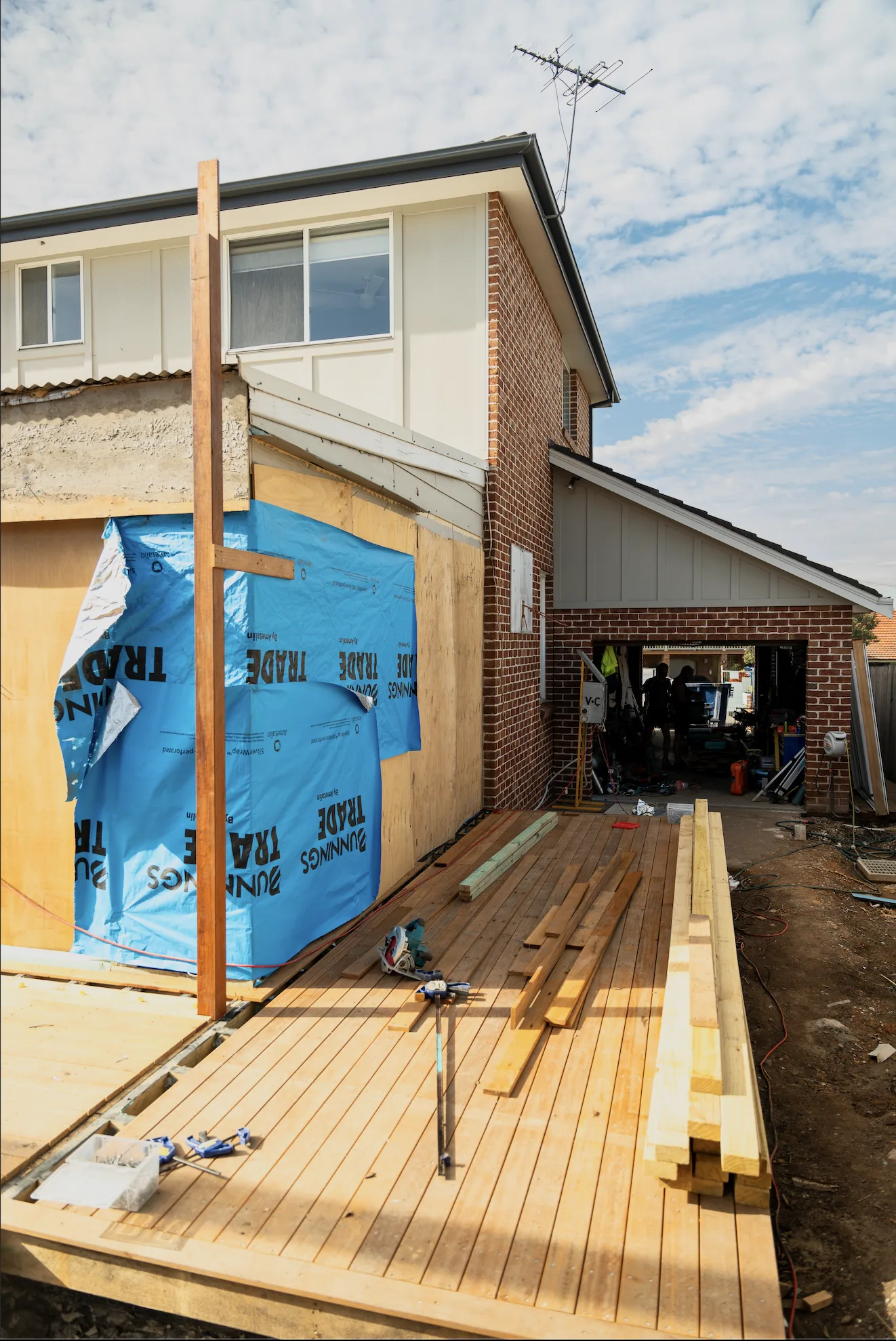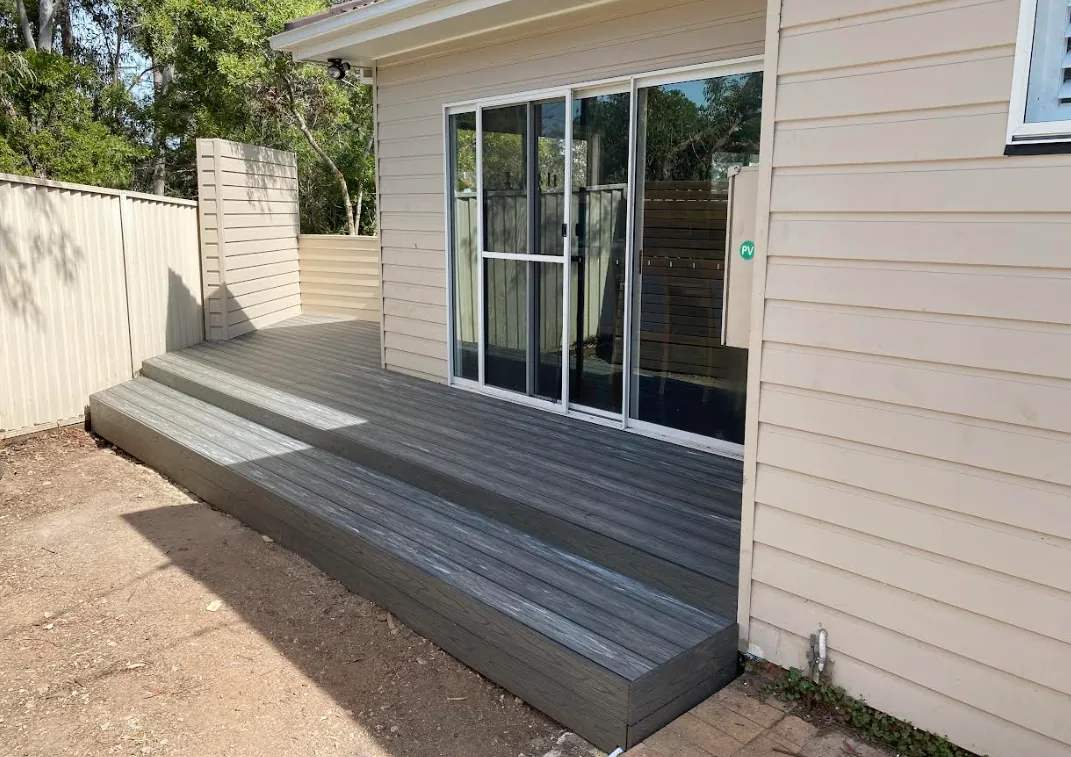
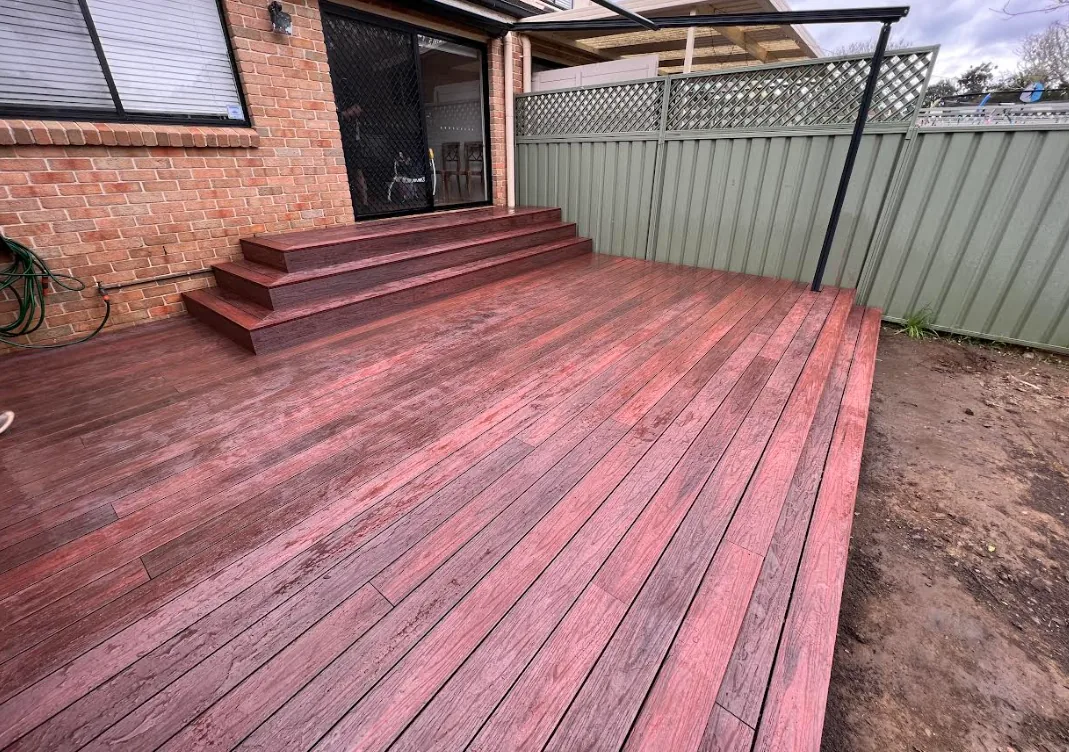
A well built hardwood deck, maintained sensibly, can serve a house for a very long time. A poorly detailed one can be in trouble within a few years. The difference is mostly construction, not material.
What actually determines deck life
Ventilation and drainage
Timber that dries out after rain lasts. Timber that stays damp does not. Decks built too close to the ground, enclosed on all sides, or sitting over poorly drained soil rot from below while the surface still looks fine.
The junction with the house
This is the single most common failure point. Where a deck meets a wall it needs correct flashing, clearance from cladding, and a detail that keeps water off the frame and away from the building. Bad detailing here damages the house, not just the deck.
Fixings and hardware
Hardware corrodes. Near the coast it corrodes faster. Bolts, joist hangers, post supports and screws need to be specified for the environment, and mixing incompatible metals with some timber species causes staining and accelerated corrosion.
Substructure sizing
Joists and bearers that are undersized or spaced too widely flex. Flex loosens fixings, opens gaps and lets water sit where it should not.
Timber selection
Durability class matters, and where each piece is used matters more. Ground contact and enclosed areas demand more durable or properly treated timber than an exposed board in the sun. Our guide to the best timber for a deck in Sydney covers the common choices.
Maintenance
Coating protects the surface from UV and moisture cycling. Uncoated timber greys, checks and eventually splinters. That is cosmetic at first and structural much later.
What fails first, in order
- Coating on the boards, particularly on the sunny side
- Fixings, especially in coastal locations
- Board ends, where moisture enters end grain
- Bearers and joists in poorly ventilated areas
- Posts at or below ground level
- The wall junction, if it was never detailed correctly
- Stair stringers and treads, which take the most traffic and weather
Details that add years
- Adequate ground clearance and cross ventilation under the deck
- Falls and drainage so water leaves the area rather than pooling
- Correct hardware for the location, hot dip galvanised or stainless as required
- Sealing cut ends of hardwood before fixing
- Consistent board gaps so water and debris pass through
- Removable panels or access so the substructure can be inspected
- Keeping planters, mats and stored items off the boards, since they trap moisture
How to tell if a deck is nearing the end
- Boards that feel spongy, or bounce underfoot
- Movement in the balustrade when you lean on it
- Rust staining around fixings
- Timber that gives way when probed with a screwdriver near posts and bearers
- Water marks on internal walls near the deck junction
- Repeated board replacement in the same area
If the substructure is sound, a tired deck is often worth reboarding rather than rebuilding. If the frame or posts are going, rebuilding properly is the better spend.
Extending the life you already have
Read the deck maintenance guide for Sydney homeowners for a practical schedule. If you are planning a new deck, how much it costs to build a deck in Sydney explains where the money goes and why the substructure is the part not to save on.
Repair or rebuild
Once a deck starts showing its age, the decision comes down to what is failing.
| What is failing | Usual answer |
|---|---|
| Coating only | Clean, prepare and recoat |
| Some boards, frame sound | Replace boards, keep the structure |
| Most boards, frame sound | Reboard entirely, replace suspect fixings |
| Fixings corroded through | Reboard and replace hardware |
| Bearers, joists or posts soft | Rebuild the affected structure |
| Water entering the house at the junction | Rebuild that section and correct the detail |
A frame that is sound is worth keeping. A frame that is going is not worth building a new surface onto, because you will be back inside a few years and paying for the boards twice.
What we look for when inspecting a deck
- Probe posts at ground level and bearers in the darkest, dampest corner first
- Check the wall junction for flashing, clearance and staining
- Push hard on balustrade at the mid span between posts
- Look at the underside for water marks, mould lines and rust runs
- Check whether debris has bridged the board gaps
- Look at the ground below for drainage and whether water sits there
Fifteen minutes tells you most of what you need to know, and it is far cheaper than discovering the answer through failure.
ORT Constructions repairs and rebuilds decks as well as building new ones. Our decks and pergolas service includes inspecting an existing substructure and telling you honestly whether it is worth keeping.
Frequently asked questions
- Can I just replace the boards on an old deck?
- If the substructure, posts and fixings are sound, reboarding is often good value. It is worth having the frame inspected properly first, since the frame is the expensive part to fix later.
- Why does one part of my deck fail before the rest?
- Almost always because it stays wet. Shaded, enclosed or poorly drained sections and areas under planters and mats dry slowly and deteriorate first.
- Does oiling actually make a deck last longer?
- Coating protects boards from UV and moisture cycling, which keeps the surface sound and reduces checking and splintering. Structural life is more dependent on ventilation, hardware and detailing.