Carpenters do more on a renovation than most homeowners realise. They are usually the first trade on site after demolition and among the last to leave, and their work sets out the job for everyone else.
Structural carpentry
This is the work that holds the house up.
- Removing walls and installing beams, with propping and temporary support
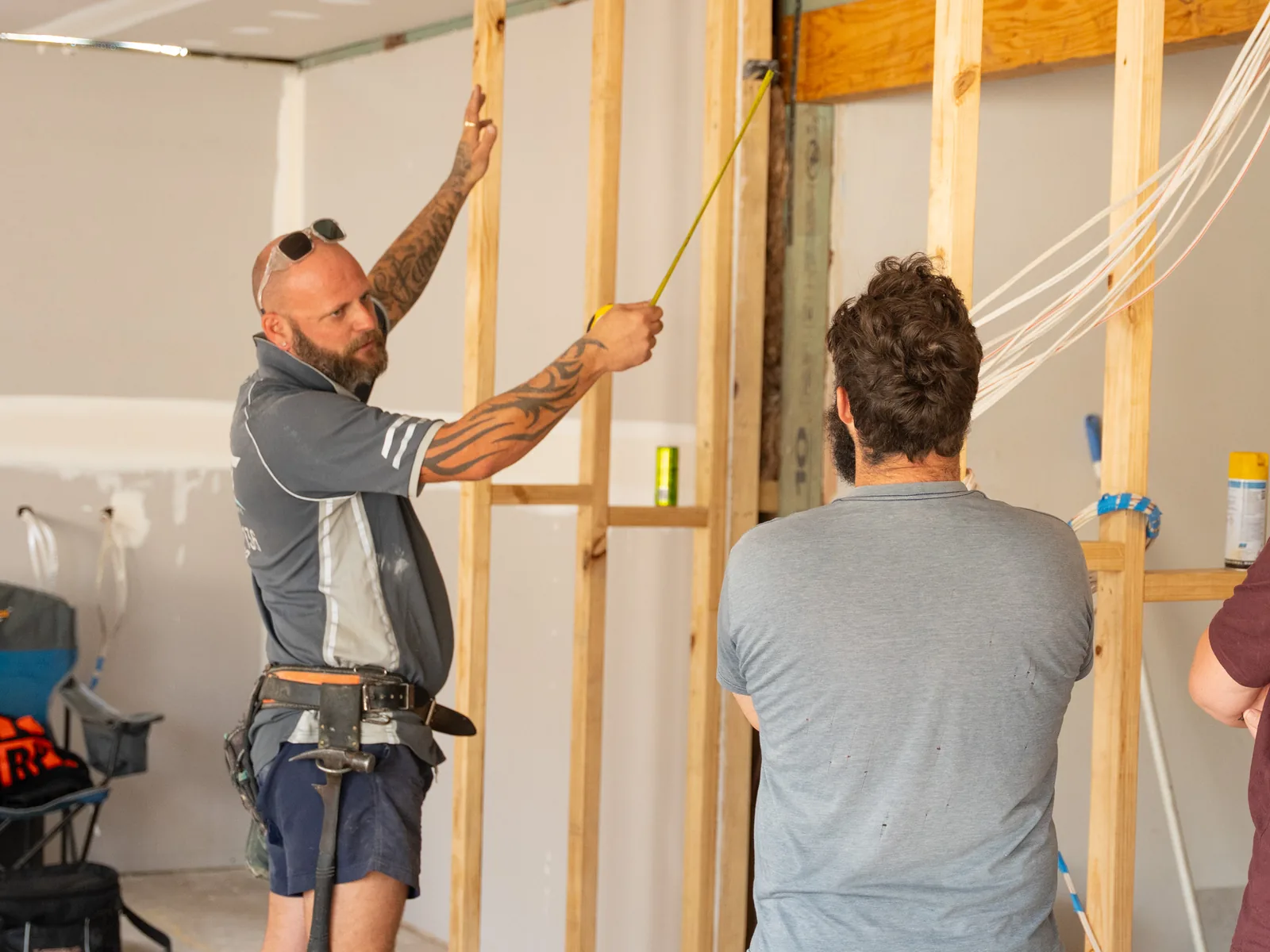
- Framing new walls, openings, bulkheads and nibs
- Repairing or replacing bearers, joists and stumps in the subfloor
- Roof framing changes, including new rafters, trusses and tie downs
- Forming openings for new windows and doors, with correct lintels
- Setting out floor levels between existing and new areas
If the setting out is wrong here, every trade after it fights the error. Square, plumb and level framing is not a nicety.
Second fix and finishing carpentry
Once linings are on, the carpenter returns for the work you actually touch every day.
- Hanging doors and fitting hardware
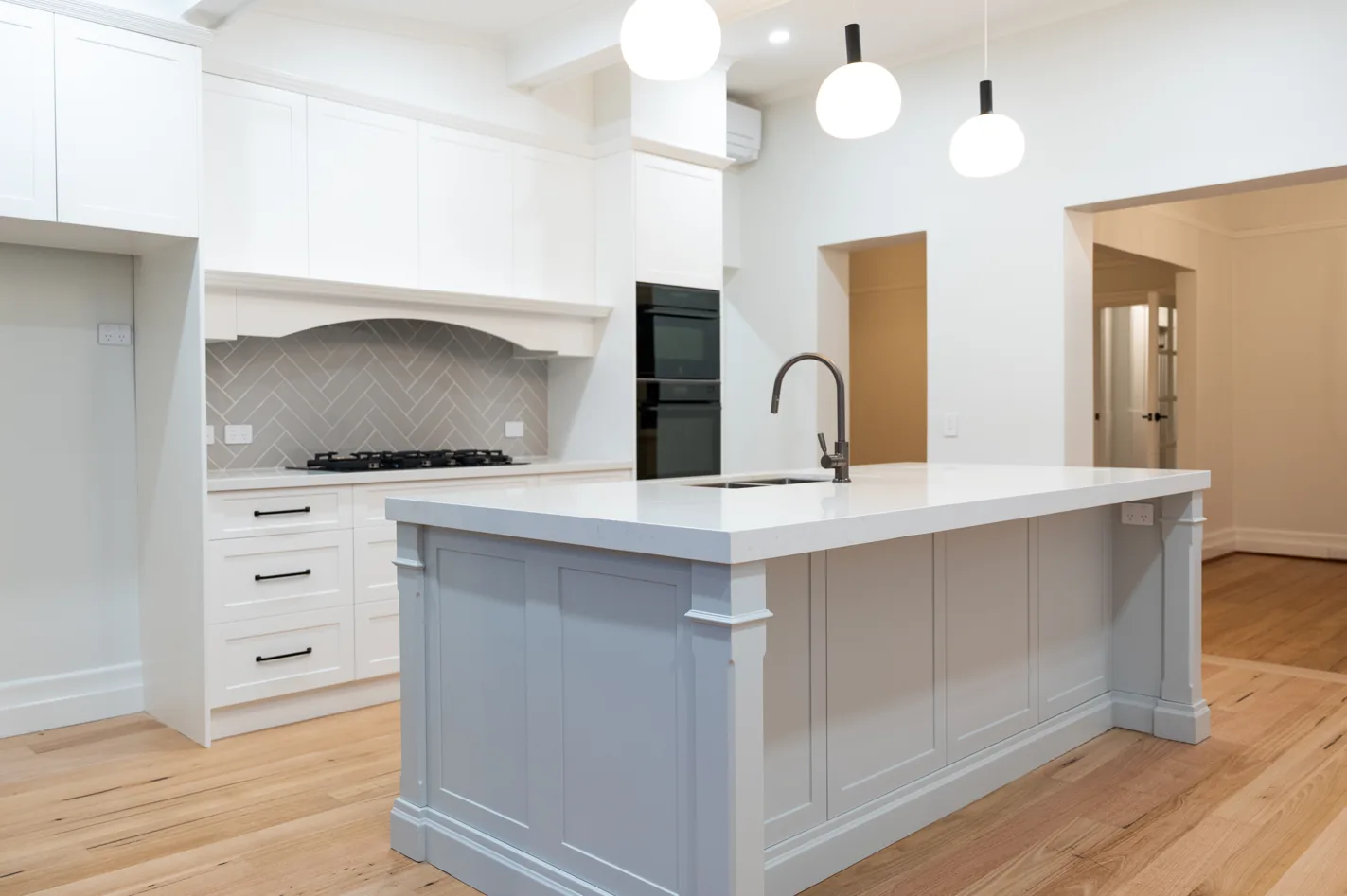
- Skirtings, architraves, cornices and trims
- Staircase construction and balustrade
- Built in wardrobes, shelving and storage
- Timber flooring installation
- Lining boards, panelling and feature walls
- Making good where new profiles meet original ones
On an older Sydney home, matching existing mouldings and profiles is a large part of whether a renovation looks considered or looks patched.
External carpentry
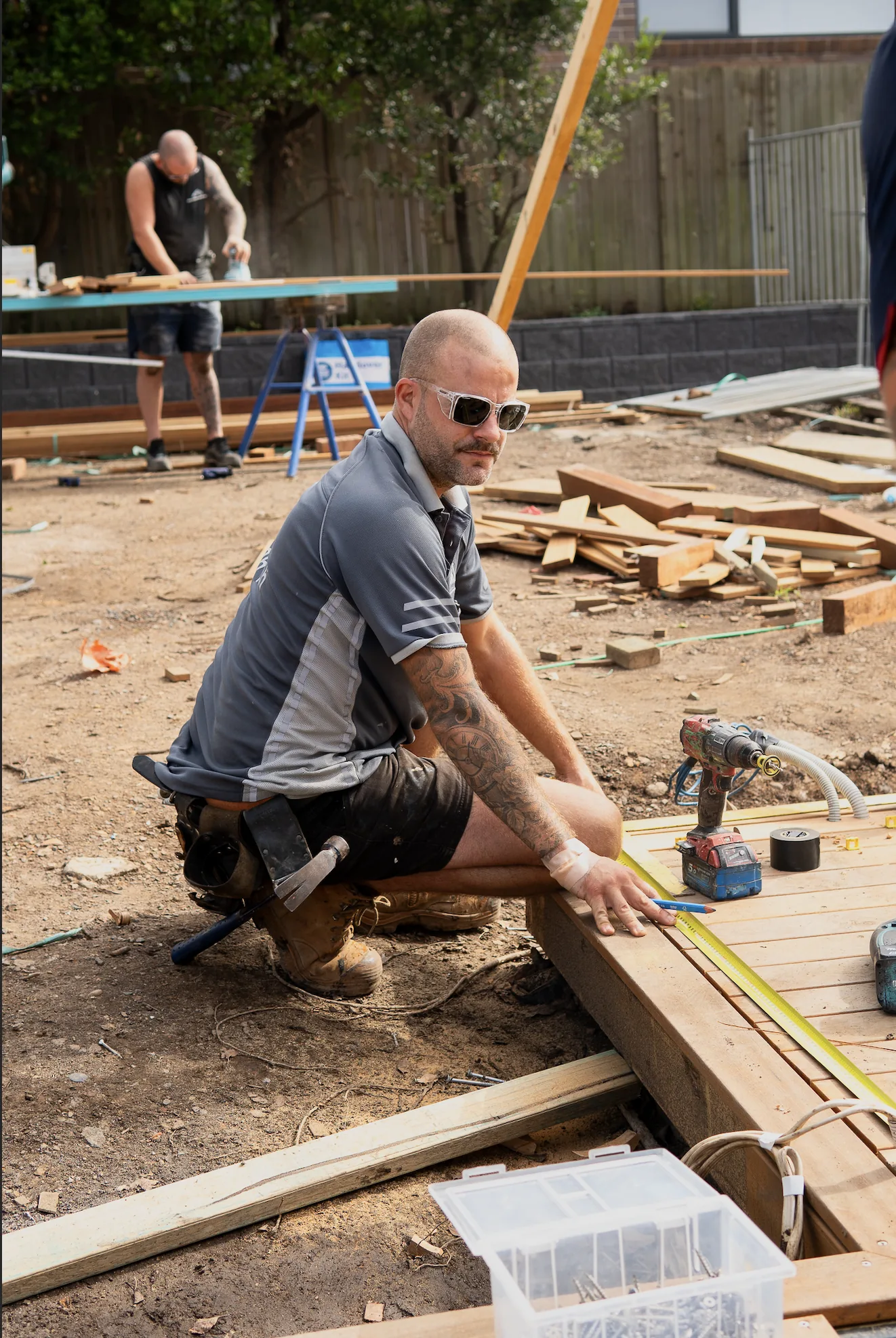
- Decks, pergolas and patio structures
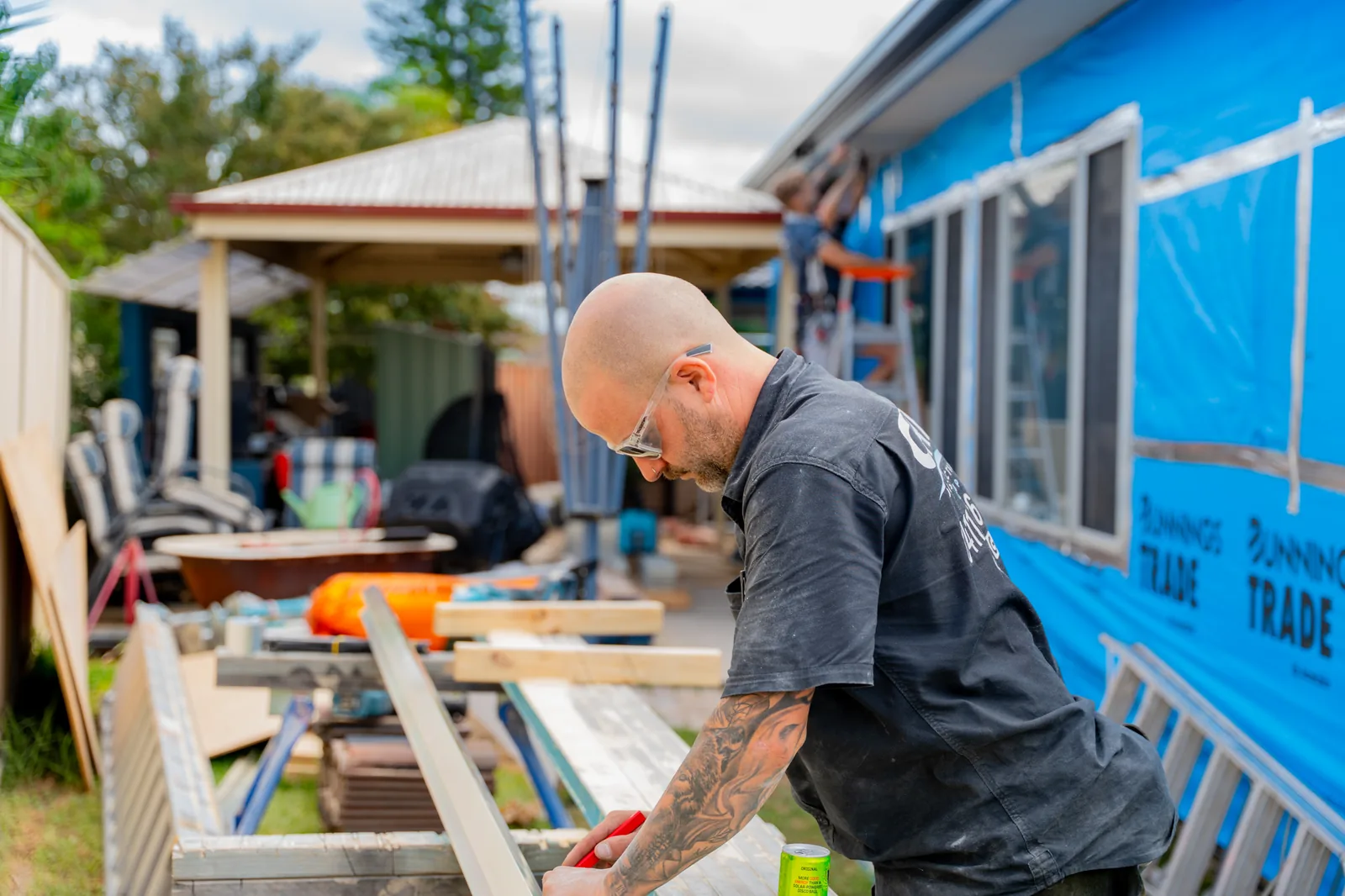
- Cladding, eaves and fascia work
- External doors and window installation
- Screening, gates and privacy structures
- Weatherproofing details where new work meets old
Where carpentry sits in the program
| Stage | Carpentry work |
|---|---|
| After demolition | Structural repair, propping, beam installation |
| Framing | New walls, openings, roof changes, floor structure |
| Lock up | Window and door installation, cladding |
| Before linings | Noggings and blocking for fixtures, cabinetry and tapware |
| After linings | Doors, skirtings, architraves, stairs, joinery |
| Finishing | Hardware, trims, adjustments, making good |
That fifth row is the one people forget. Blocking behind plasterboard for wall hung vanities, grab rails, TV mounts and shelving has to go in before the linings do. A good carpenter asks about those items early.
Why the quality of carpentry shows
Painters, tilers and cabinetmakers all work to what the carpenter set out. Walls that are out of plumb show in tiling. Doors hung poorly are noticed every day. Skirting joints that open up are the first thing visitors see. Carpentry is the trade whose standard is hardest to hide.
Carpenter or builder?
On a renovation involving structure, wet areas and multiple trades, you need a builder to hold the whole job together, and carpenters within it. For defined pieces of work such as a deck, a set of built ins or repairs, a licensed carpenter may be all you need. When to hire a carpenter instead of a handyman works through that.
At ORT Constructions the carpentry is done by our own team rather than subcontracted, which is why we can control the structural stages of a renovation program directly.
Related reading
The two halves of the trade
It helps to separate what a carpenter does into structural work and finishing work, because they happen at different stages and are judged differently.
Structural carpentry covers wall framing, floor framing, roof framing and trusses, structural openings, temporary propping, subfloors and the framing for decks and outdoor structures. It is measured on accuracy, plumb, level and load paths. When it is right you never think about it again.
Finishing carpentry covers doors and door hardware, skirtings, architraves, linings, staircases, built in joinery, cladding and trims. It is measured on the quality of joints, consistency of margins and how well new work meets old.
A good renovation carpenter does both, and knows that the first determines how well the second can be executed.
Where a carpenter saves a renovation money
- Identifying which walls are structural before demolition rather than after
- Setting out early so tiling, joinery and flooring all land correctly later
- Getting openings, sizes and heights right the first time so other trades are not reworking
- Flagging existing framing problems while the wall is still open
- Sequencing so that plasterers, tilers and cabinet makers arrive to a surface they can work on
What to ask about carpentry in your quote
Ask whether framing and fixing carpentry are both included, who supplies the timber and hardware, how existing profiles will be matched, and whether the carpenter is the same person for both stages. Continuity between framing and fixing produces a noticeably tidier result.
Frequently asked questions
- Is a carpenter the same as a builder?
- No. A carpenter performs carpentry work, while a builder holds responsibility for the whole project, including coordinating trades, compliance and the contract. Many builders are qualified carpenters.
- When does the carpenter come back after framing?
- After linings go on, for second fix work: doors, skirtings, architraves, stairs and built in joinery. Blocking and noggings for fixtures must be installed before the linings.
- Do carpenters install kitchens?
- Carpenters commonly install cabinetry and can build joinery on site, while cabinetmakers manufacture it. On many renovations both are involved, with the carpenter preparing the openings, blocking and services setout.