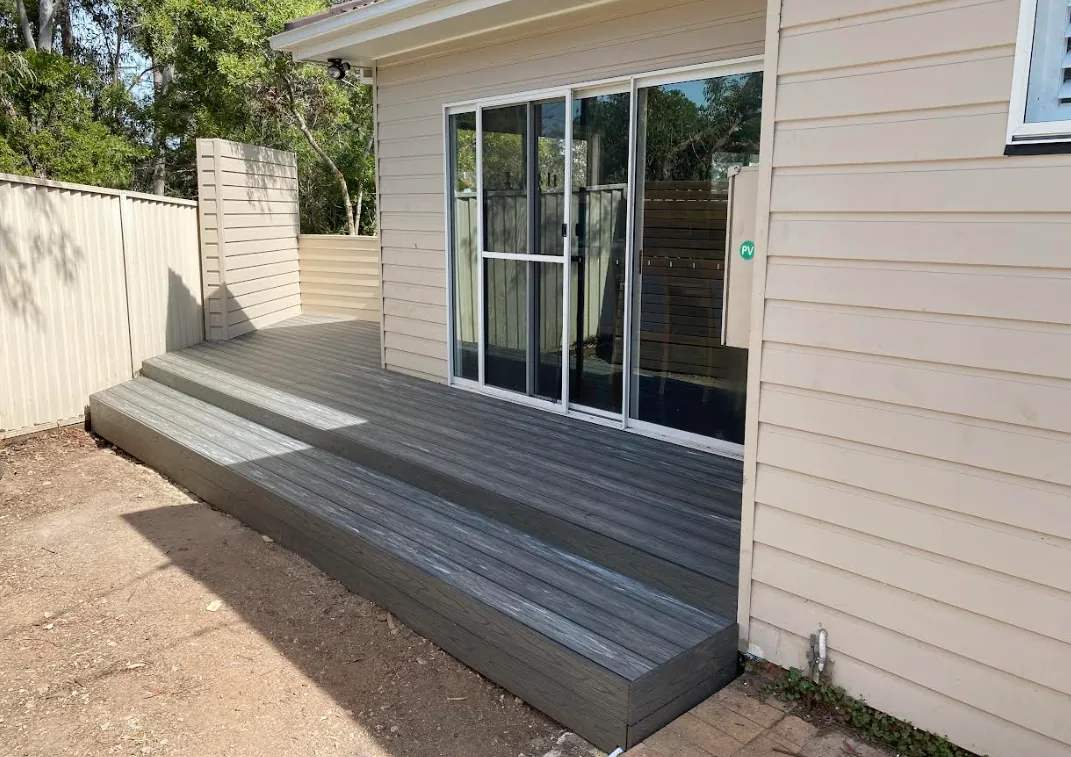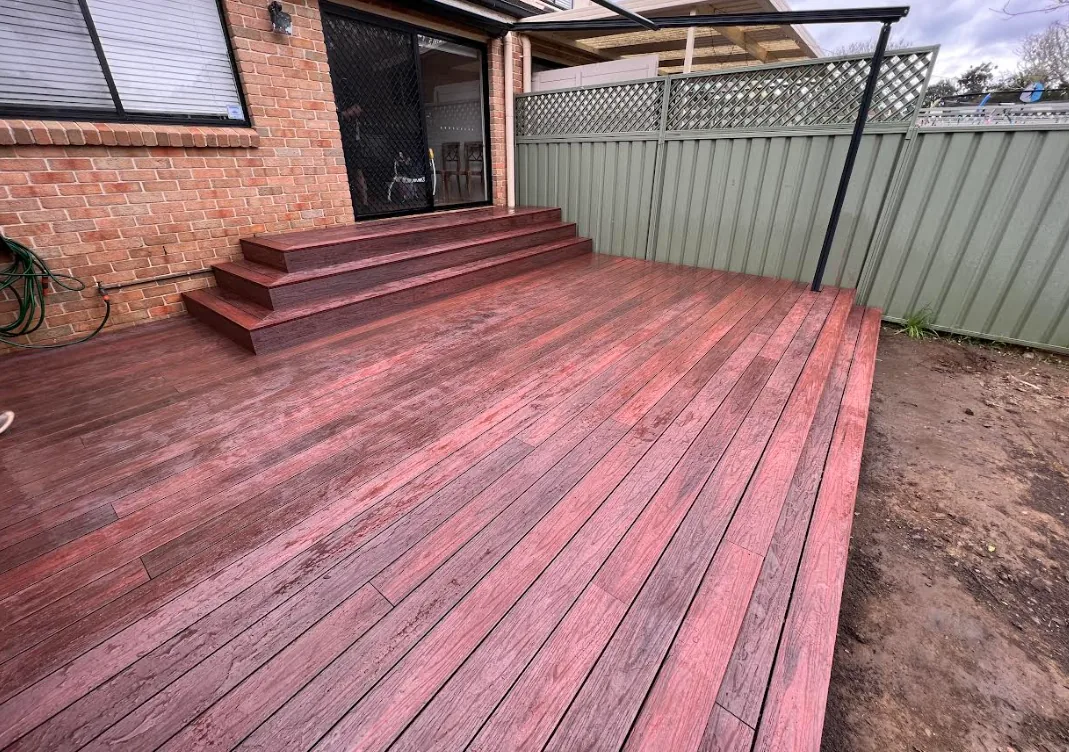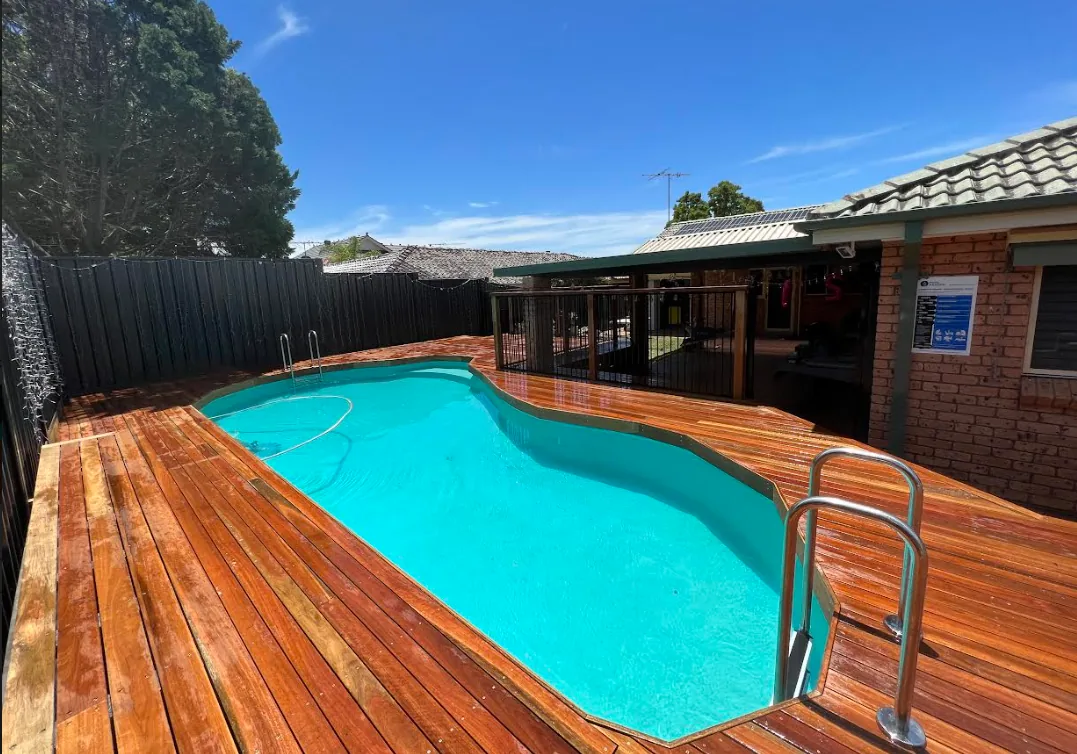
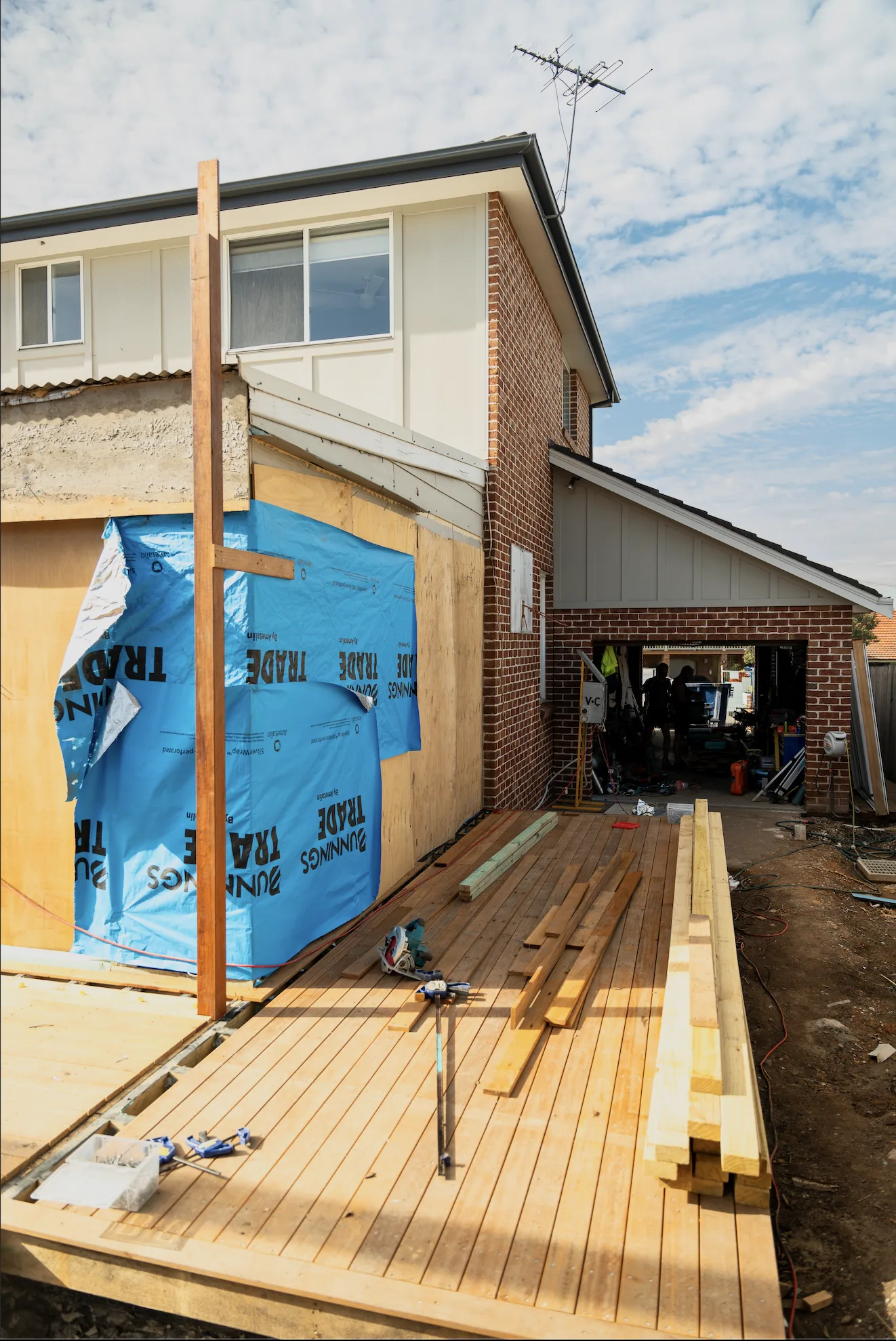
There is no single best decking timber. There is a best timber for your deck, chosen against sun exposure, distance from the coast, whether it surrounds a pool, how much maintenance you will do, and what you want it to look like.
How to think about durability
Timber durability is classified for above ground and in ground use, and the two are different. A species that performs well as a decking board may not be suitable for a post set in concrete. Treated softwoods carry treatment levels intended for specific applications, including ground contact.
The practical rule: choose the board for appearance and wear, and choose the structural timber for exposure and contact. Ground contact and enclosed subfloor areas are where durability matters most.
Common decking options in Sydney
Australian hardwoods
Species such as spotted gum, blackbutt, ironbark and merbau are widely used. They are dense, wear well and hold a coating. Colour and grain vary between species and between boards, which most people consider part of the appeal. Denser hardwoods need pre drilling and disciplined fixing, and cut ends should be sealed.
Treated pine
The economical option, and perfectly serviceable when the correct treatment level is used for the application and the deck is coated and maintained. It is softer, so it marks more readily, and it moves more than dense hardwood.
Modified and engineered timbers
Products that alter the timber to improve stability and durability. They sit at a higher price point and behave predictably, with defined coating requirements.
Composite
Not timber, but usually in the same conversation. See timber versus composite decking.
Matching species to the situation
| Situation | What to prioritise |
|---|---|
| Full northern sun, no shade | Dense hardwood, light colour, disciplined coating schedule |
| Near the coast | Corrosion resistant hardware first, then a durable species |
| Around a pool | Slip resistance, comfort underfoot, tolerance of splashing and chemicals |
| Shaded and damp | Ventilation and drainage, durable structural timber below |
| Tight budget | Correctly treated pine with a proper substructure and a maintenance plan |
| Heritage or traditional home | Hardwood with a board width that suits the house |
Details that matter as much as species
- Hardware. Hot dip galvanised or stainless as the location requires. Some hardwoods react with certain metals and stain.
- Board width. Wider boards look generous but cup more. Narrower boards are more stable.
- Fixing method. Top fixed screws are serviceable and easy to maintain. Hidden fixings look cleaner and cost more.
- Gaps. Consistent gaps let water and debris pass through, and allow for seasonal movement.
- Sealing ends. Cut ends absorb moisture. Sealing them before installation is quick and pays off.
- Coating. Choose the coating system before you install, because some products need coating before or immediately after installation.
Sustainability and sourcing
Ask where the timber comes from and whether it is certified. Reputable suppliers can tell you. It is a fair question and it does not usually cost more to ask it.
What we usually recommend
For most Sydney backyard decks where the owner wants a natural look and is prepared to maintain it, a quality Australian hardwood in a board width suited to the house is a reliable choice. For decks around pools, comfort underfoot and slip resistance move up the list. For budget conscious projects, correctly treated pine over a properly sized substructure beats an expensive board over a marginal frame every time.
Related reading: how long does a timber deck last and how much it costs to build a deck in Sydney.
Board width, thickness and appearance
Width and thickness change both the look and the performance.
- Narrower boards are more stable and cup less, and they suit smaller decks and older homes
- Wider boards give a more contemporary, generous look and move more with moisture change
- Thickness has to suit your joist spacing, and going thinner to save money usually means closer joists, which cancels the saving
- Mixed widths can work as a deliberate design choice, though they need careful setting out
Coating choices
Broadly there are oils, decking stains and film forming coatings. Oils are simple to reapply and weather gradually. Film forming products can look excellent and last longer between coats, but when they fail they need more preparation before recoating.
Whichever system you choose, stay with it. Changing systems part way through a deck's life usually means stripping back rather than simply recoating.
Buying and handling
- Order a little extra. Boards are selected on site and there will be some you set aside.
- Let timber acclimatise on site before fixing rather than laying it straight off the truck.
- Store it flat, off the ground and under cover.
- Seal cut ends as you go, not at the end of the day.
- Set out board runs so joints land on joists and fall in sensible places.
None of this is exotic, but it is the difference between a deck that looks tight after two summers and one that does not.
ORT Constructions builds decks throughout Sydney through our decks and pergolas service, and our carpentry team does the framing, decking and finishing work.
Frequently asked questions
- Which decking timber needs the least maintenance?
- All timber decks need periodic cleaning and recoating. Dense hardwoods hold up better between coats than softwoods, but if minimal maintenance is the priority, composite is worth considering.
- Can I use decking timber for the posts and bearers?
- Not necessarily. Structural and ground contact timber must be rated for that application, which is a different requirement to a board fixed above ground.
- Do I need special fixings near the beach?
- Yes. Coastal exposure accelerates corrosion, so hardware specification matters as much as timber choice, and stainless is commonly used in those locations.